The Dark Beyond the Palisade
On fear, and on showing less than I built.
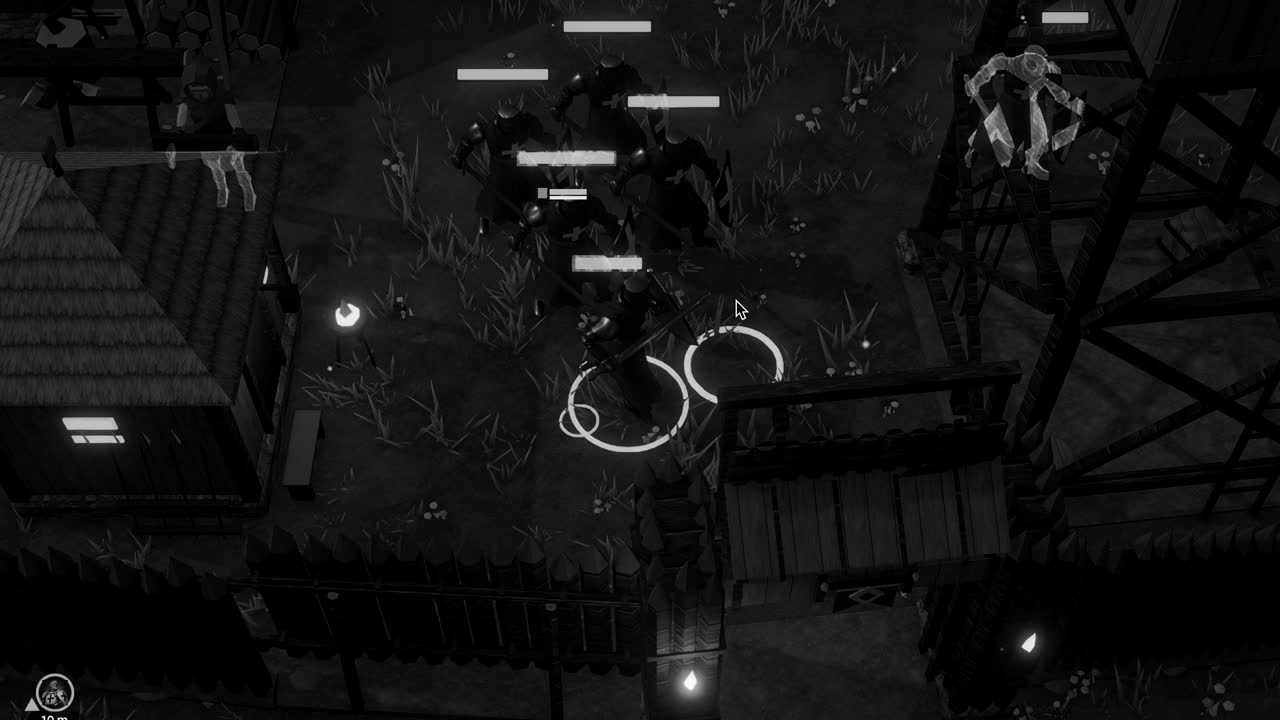
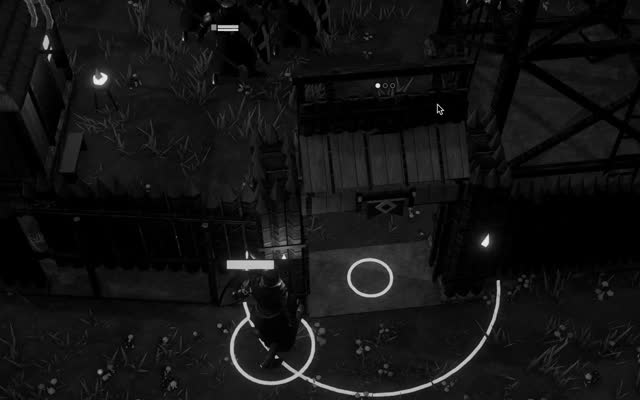
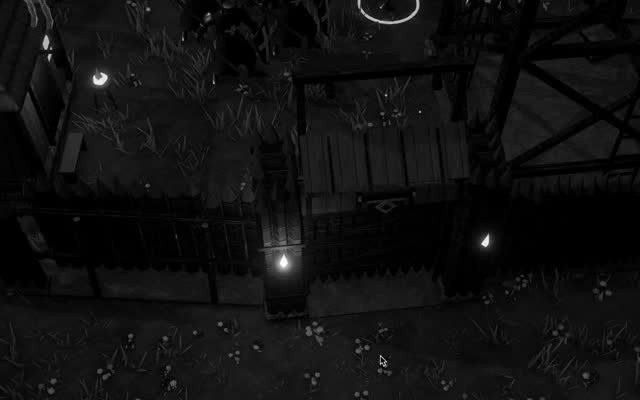
Every wall is a confession. When your people raise a palisade around their houses, driving sharpened logs one after another into frozen ground, they are saying, plainly and without shame, that they are afraid of what is out there. Nobody builds a wall against an empty field. I wanted the walls in Crown & Ashes to feel exactly like that. Armour is proud and polished. A palisade in this game should feel more like a held breath.
There is a fear older than any monster, and our ancestors knew it intimately. They sat with their backs to the fire and their faces to the forest, and they understood, without anyone having to tell them, that the forest was larger than the fire and always would be. The oldest fear was never of monsters as such. It is the fear of the unknown thing that might turn out to be a monster, the shape at the edge of sight that has not yet decided what it is.
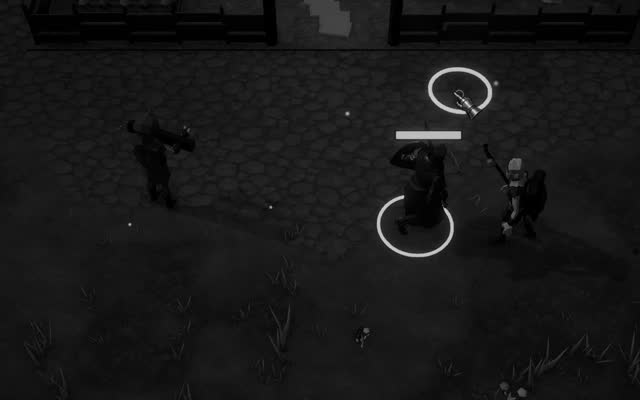
So the night in this game is built on what you do not see. The Hunger comes from the tree line, and the tree line is black. You hear the dead before you can count them: a branch giving way, a dragging step, something that may be the wind and is not. A watchman's torch shows you three of them at the edge of the clearing. You will learn later, when the knowledge no longer helps, that there were thirty.
This has taught me a hard rule, and I keep it even when it hurts: show less than you built. I could light the entire forest. I could display every creature walking toward your gates, mark each one with a neat little bar, and let you plan accordingly. It would be clearer, and it would be worthless. Fear lives in the gap between a sound and its source, between the last ring of firelight and the first shape that crosses it. Close that gap and all that remains is arithmetic.
Restraint is expensive. You spend weeks on something and then you hide it, and only its edge is ever glimpsed. I have read a good deal of old weird fiction, the kind written by solitary men in New England who sat up late writing long letters by lamplight, and the chief lesson I took from them is that the most terrible thing in a story is almost never described. A smell on the wind. Footprints that stop in the middle of a field. A door that was closed and now stands open, for no reason anyone can name. The reader supplies the rest, and the reader is always more cruel to himself than the writer could ever be.
And then there are the Unknown Lands. Beyond the borders of the known kingdoms of Morvenn lie places the chroniclers simply call by that name, because they have no better one. No map covers them, and no map ever will, for the world keeps generating past the last road. Even I cannot see what is out there until someone walks into it. I find that thought more comforting than I probably should. After years of shaping every stone of this world by hand, it is a strange relief to know that some part of it will always be dark to me as well.
Build your walls. Light your torches. Then listen. Something old is listening back.