Making a Game Alone: The Discipline of the Solo Developer
A solo developer's greatest enemy is not a lack of skill but an excess of ambition, and the craft of working alone is mostly the patient, unglamorous discipline of choosing what not to build.
There is an hour, usually late in the evening, that every solo developer comes to know intimately. The house is quiet, the day's obligations are finished, and the project waits on the screen exactly where it was left, neither better nor worse than yesterday unless one makes it so. No colleague will notice if nothing happens tonight. No manager will ask. The whole enterprise rests on a single person's willingness to sit down once more, and that is both its freedom and its peril.
Making a game alone is an old and honorable practice, and some of the most beloved games ever made began in exactly this solitude. It is also, by any reasonable account, a strange thing to attempt. A game demands programming, art, sound, writing, design, testing and the endless small labors of release, each of which is a profession in its own right. The solo developer must become a passable practitioner of all of them, and must accept being a master of very few.
What follows is not a recipe, since there is none, but a set of reflections on the disciplines that seem to separate the solitary projects that are finished from the far larger number that are not. Most of them have little to do with technical skill. They concern scope and honesty, the use of prototypes, the courage to cut, the protection of one's own energy, and the stubborn final effort of finishing.
The arithmetic of one
The first truth of working alone is that there is only so much of you. A team of twenty working for two years has, in raw hours, many times what a single person working evenings could ever give, and yet solo developers routinely set out to build games whose ambitions are drawn from exactly such teams. The imagination is generous; the calendar is not. Every feature costs not only the time to build it but the time to debug, balance, polish and maintain it until release.
This cost is almost always underestimated, and not through stupidity. When we picture a feature, we picture it working, and the picture is free. We do not picture the evening lost to a save system that corrupts files only when the player quits during autosave, or the week spent making the inventory work with a gamepad. These hidden costs are where solitary projects quietly bleed out, one reasonable addition at a time.
The name for this slow bleeding is scope creep, and it is all the more dangerous for being pleasant. Each new idea arrives with the glow of novelty, which the existing work, by now familiar and full of known flaws, cannot match. Adding something new feels like progress; fixing something old feels like drudgery. A project can grow for months in this way, always busier and never closer to done, until its author no longer believes it can ever be finished.
The only real defense is to decide, early and in writing, what the game is and what it is not. A short document describing the core experience, the few systems that serve it and an explicit list of things that will not be built is worth more than any elaborate design bible. When a new idea arrives, it can be measured against that document, and usually set aside in a file of future possibilities, where it can glow harmlessly forever.
Prototypes and slices
Before anything is built properly, the central idea should be built badly. A prototype is a deliberately crude experiment, grey boxes and placeholder sounds, designed to answer one question: is this fun, or at least interesting, in the hands? It is astonishing how often an idea that seemed irresistible in the mind proves dull in practice, and how often an accidental side effect of the prototype turns out to be the real game. Discovering either in a weekend is far better than discovering it in a year.
Prototype code should be treated as disposable, and this is harder than it sounds. Having written something that works, the developer feels a natural reluctance to throw it away, and so the hasty experiment becomes the foundation of the real project, with all its shortcuts preserved. A useful habit is to keep prototypes in a separate project entirely, so that rebuilding the idea cleanly is a conscious decision rather than an accident of convenience.
Once the core is proven, the next step is a vertical slice: a small portion of the game finished to the standard of the final product, with real art, real sound, menus, a save, and every system working together. A slice reveals the true cost of a minute of finished content, which is the single most useful number a solo developer can know. Multiply it by the length of the planned game, and the plan either survives the arithmetic or it does not.
The courage to cut
If the vertical slice reveals that the planned game would take a decade, the answer is not to work harder but to make a smaller game. This is where many projects falter, because cutting feels like failure, a public admission that the original vision was too large. Yet every finished game is the product of cuts. What players experience is not the imagined whole but the part that survived, shaped and strengthened by the removal of what could not be done well.
A useful exercise is to define the minimum viable version of the game: the smallest thing that still delivers its central experience completely. Not a demo, not a fragment, but a whole small game. Everything beyond that line becomes optional, to be added only if time allows and only in order of how much it serves the core. Often the minimum viable game, polished with the time saved, turns out to be better than the sprawling one would have been.
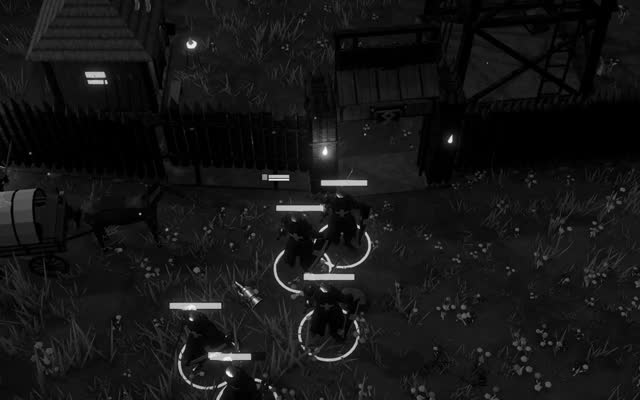
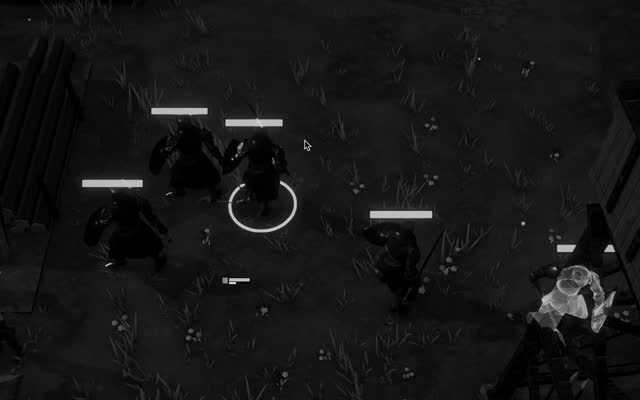
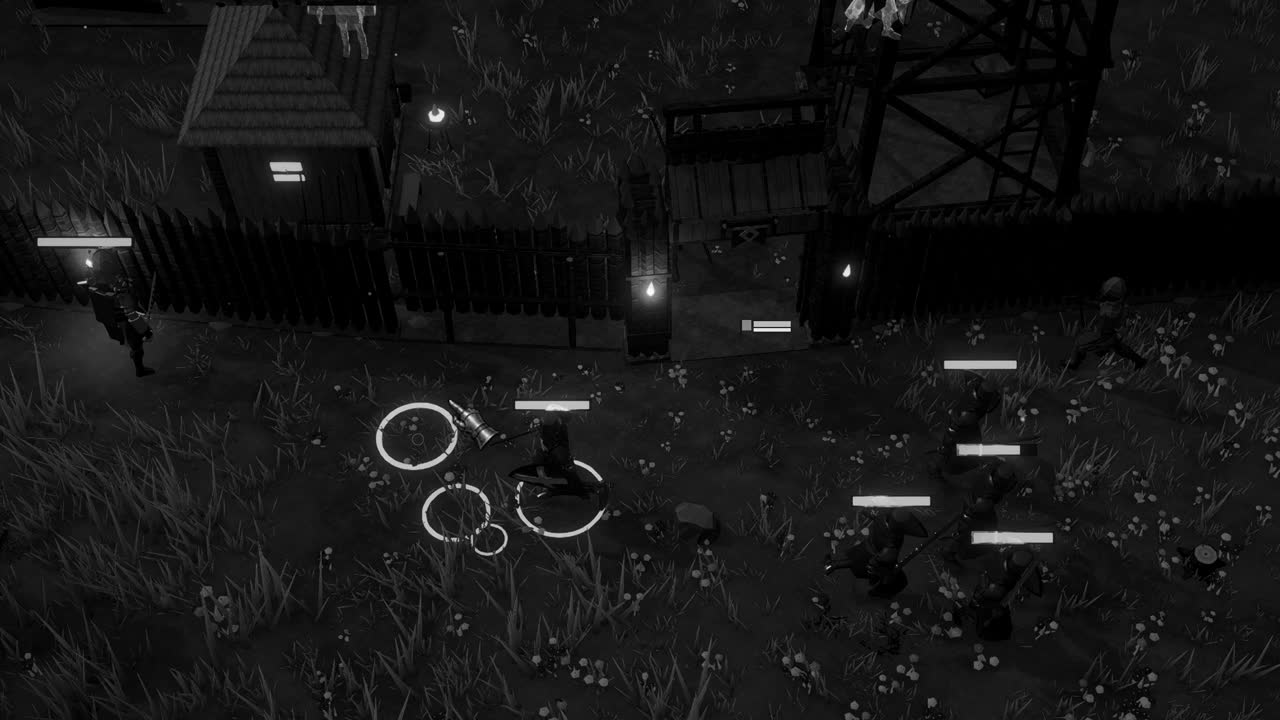
Cutting is also a matter of depth rather than breadth. It is usually wiser to have three systems that are deep, interlocking and well tuned than ten that are shallow and barely connected. In a game about a small settlement, for example, it may be better to make the rhythm of building by day and defending by night truly tense, as Crown & Ashes tries to do, than to add trade routes, diplomacy and a dozen resources that dilute the central loop without enriching it.
Keeping the fire lit
A solo project is a long effort sustained by a single source of energy, and that source can be exhausted. Burnout rarely arrives as a crisis. It creeps in as a dulling of interest, a growing reluctance to open the project, a sense that the work has become a debt rather than a pleasure. The developer who works every night and every weekend for months in a fit of enthusiasm is often the one who, half a year later, cannot bear to look at the game at all.
The antidote is less heroic than it sounds: a sustainable routine. Working a consistent, modest amount, at a regular time, on most days rather than all of them, tends to produce more over a year than bursts of frantic effort separated by collapses. A small daily habit also lowers the cost of starting, which is often the hardest part. Opening the project for twenty minutes, intending only to fix one small bug, frequently becomes an evening of real work.
It helps, too, to make progress visible. Working alone, one loses the encouragement that colleagues provide by simply noticing what was done. A simple log of each session, a short development diary, or regular screenshots shared with a small community can restore that sense of motion. Looking back over a month of entries, even modest ones, is a quiet reassurance on the evenings when the project feels as though it has not moved at all.
Rest is part of the work, not its enemy. Stepping away for a week, deliberately and without guilt, often returns the developer with fresh eyes and solutions that months of stubborn effort failed to find. Problems that seemed insurmountable at midnight frequently dissolve in the morning. Protecting sleep, health and the relationships that exist outside the project is not a distraction from making the game; it is the condition under which the game can be made at all.
Borrowed hands
No solo developer truly works alone, because the tools themselves embody the labor of thousands. An engine such as Unity provides rendering, physics, audio, input and builds for dozens of platforms, any one of which would consume years to write from scratch. Choosing to build on such foundations rather than reinventing them reflects a sober allocation of a finite life, and very few solitary games would exist without it.
The Asset Store and similar marketplaces extend this further, offering models, textures, sound effects, music and code that a single person could never produce at comparable quality. Used wisely, they free the developer to concentrate on what makes the game distinct. Used carelessly, they produce a recognizable patchwork of mismatched styles that players identify instantly. The art lies in choosing assets that share a coherent look, or in modifying them so that they belong to one world.
Code packages deserve particular caution, because they become part of the foundation. A third party system that is abandoned, poorly documented or incompatible with the next engine version can trap a project for months. Before adopting one, it is worth reading its source, checking how recently it was updated, and asking whether its core function could be written in a few days instead. Sometimes the answer is yes, and owning the code is the safer choice.
The last tenth
There is an old saying among programmers that the first ninety percent of a project takes ninety percent of the time, and the remaining ten percent takes the other ninety. Game development honors this joke with grim fidelity. The final stretch consists of everything nobody dreams about: settings menus, controller support, localization, store pages, trailers, crash reports, the bug that appears only on one graphics card. It is in this stretch that many nearly finished games are quietly abandoned.
Finishing requires a different temperament from starting. Where the beginning rewards imagination, the end rewards stubbornness and a tolerance for tedium. It helps to set a release date early and keep it visible, to stop adding features well before that date, and to treat every remaining task as a small, closable item rather than a vague cloud of work. A finished game with flaws can be played, improved and learned from; an unfinished masterpiece can do none of these things.
And so the evening hour returns, as it always does, with the project waiting where it was left. The solo developer's discipline is mostly the quiet repetition of that hour: choosing once more what to build and what to leave out, doing the next small thing, resting when rest is needed, and refusing to let the ideal game prevent the real one. It is a long and solitary road, but those who walk it to the end carry away something no team can give them.